Speculative fiction
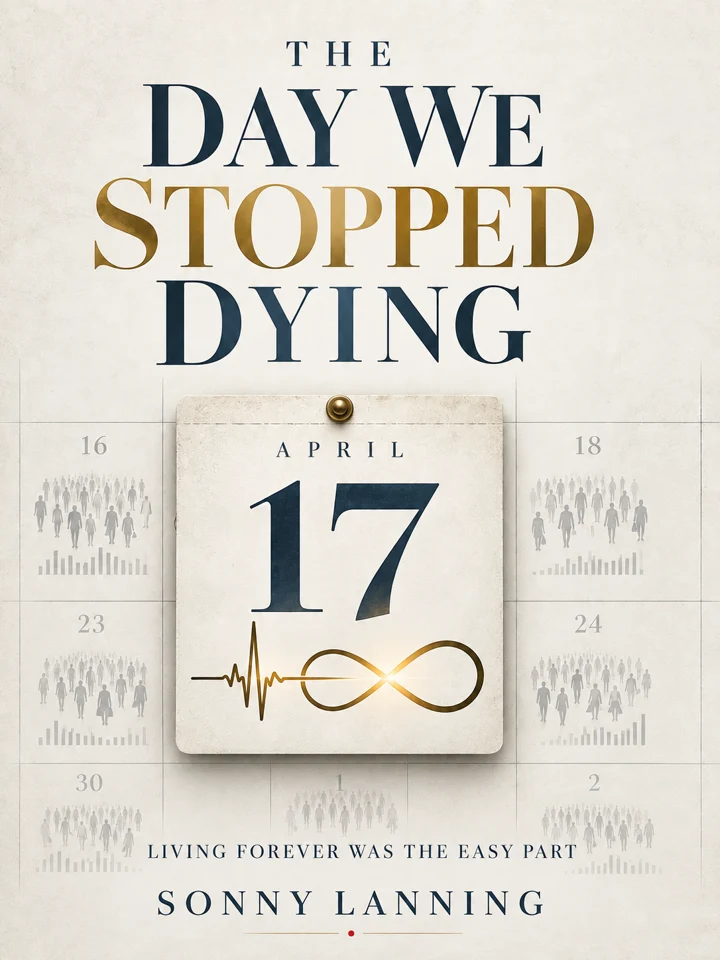
The Day We Stopped Dying
Living Forever Was The Easy Part
The breakthrough works. Biological ageing stops, and death becomes a choice rather than the expectation around which every life is organised. Humanity is offered the miracle it has imagined for centuries: more time with the people it loves, more time to learn, more time to become. At first, the possibilities seem large enough to contain any difficulty that might follow.
The difficulties emerge through the arrangements of ordinary life. Work no longer passes naturally from one generation to another. Inheritance loses its familiar timing. Parenthood, housing and authority must be reconsidered in a world where the people already established may remain indefinitely. Institutions shaped by succession find themselves accommodating lives that have no obligation to end on schedule.
Following one family across almost two centuries, The Day We Stopped Dying traces what happens as an extraordinary medical success becomes a lasting condition of existence. Family roles stretch beyond the spans that once gave them shape. Memory accumulates. The chance to continue offers comfort, but also allows decisions, possessions and power to remain with people who no longer have to make room for successors.
For those arriving later, an open future may be less open than it appears. For those who have gained more life, stepping aside becomes a choice with no natural deadline. Love and responsibility are tested by a problem longevity cannot solve on its own: how to value continuing lives while leaving meaningful space for lives that are only beginning.
The novel asks what civilisation must change when its oldest limit is lifted. Its central challenge comes from a cure that fulfils its promise, leaving humanity to discover the consequences of getting what it wanted. When preserving a life becomes indefinitely possible, making room for the future may require a kind of generosity no previous generation had to practise.
Ebook purchase link coming soon.